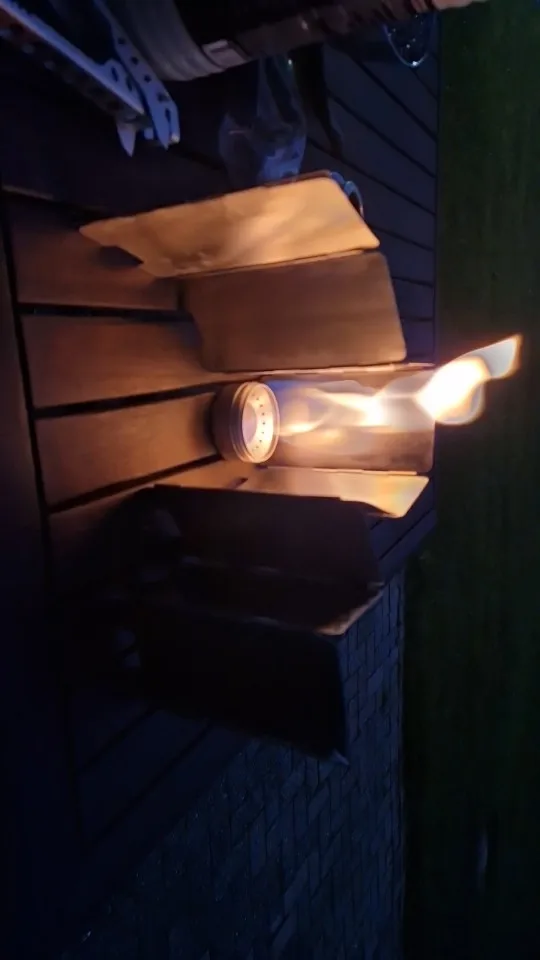
It is not the burner. A breeze pulls the heat sideways before it ever reaches the pot. You burn more fuel, you wait longer, and on a bad day the flame goes out entirely.
The screen keeps the heat under the pan where it belongs.


Count the plates by how wide your stove is. More plates wrap further around the burner.


Yes. Wind pulls heat away from the pot before it can do any work. Blocking it means the flame stays put, the water boils faster, and you use less gas getting there.
Measure how wide your burner is. 8 to 10 plates suit small backpacking burners. 12 fits most single burner cassette stoves. 14 to 16 covers wide burners and larger pots.
Yes, as long as you leave a gap for air and do not wrap the screen tight against the fuel canister. Heat building up around a canister is not safe.
A few inches of clearance on every side. The screen redirects wind. It is not meant to trap heat around the burner or the gas.
It folds flat into a strip about the width of one plate. It slides into a side pocket or lies flat at the bottom of the pack.
Aluminium alloy plates joined on steel pins, so it flexes into shape and folds back down without bending out of true.
| Material | Aluminium alloy plates, steel pins |
| Plate options | 8, 9, 10, 12, 14, 16 |
| Folds | Flat, to the width of a single plate |
| Works with | Canister, cassette and backpacking stoves |
| Use | Outdoor only |
Outdoor use only. Keep a few inches of clearance between the screen and the burner on every side, and never wrap it tightly around a gas canister — trapped heat can raise canister pressure. Leave one side open so air still reaches the flame. The plates get hot during use; let them cool before folding. Follow the safety instructions that came with your stove.
Your flame just blew out. Again.
You waited twenty minutes for water to boil. A gust came through the trees. The burner went dead and everybody is still standing there, cold, waiting on you.
This folds around the stove in about five seconds and the wind stops mattering.
It is not the burner. A breeze pulls the heat sideways before it ever reaches the pot. You burn more fuel, you wait longer, and on a bad day the flame goes out entirely.
The screen keeps the heat under the pan where it belongs.
Count the plates by how wide your stove is. More plates wrap further around the burner.
Yes. Wind pulls heat away from the pot before it can do any work. Blocking it means the flame stays put, the water boils faster, and you use less gas getting there.
Measure how wide your burner is. 8 to 10 plates suit small backpacking burners. 12 fits most single burner cassette stoves. 14 to 16 covers wide burners and larger pots.
Yes, as long as you leave a gap for air and do not wrap the screen tight against the fuel canister. Heat building up around a canister is not safe.
A few inches of clearance on every side. The screen redirects wind. It is not meant to trap heat around the burner or the gas.
It folds flat into a strip about the width of one plate. It slides into a side pocket or lies flat at the bottom of the pack.
Aluminium alloy plates joined on steel pins, so it flexes into shape and folds back down without bending out of true.
| Material | Aluminium alloy plates, steel pins |
| Plate options | 8, 9, 10, 12, 14, 16 |
| Folds | Flat, to the width of a single plate |
| Works with | Canister, cassette and backpacking stoves |
| Use | Outdoor only |
Outdoor use only. Keep a few inches of clearance between the screen and the burner on every side, and never wrap it tightly around a gas canister — trapped heat can raise canister pressure. Leave one side open so air still reaches the flame. The plates get hot during use; let them cool before folding. Follow the safety instructions that came with your stove.